

SGI IRIS 4D
 | |
| A Professional IRIS, the first IRIS 4D line, at the Computer History Museum (Seiya Ishibashi, CC BY 2.0) | |
| Specifications | |
|---|---|
| Manufacturer | Silicon Graphics |
| Type | Family of workstations and servers |
| Released | 1987[1] |
| Discontinued | Names dropped from late 1992[1] |
| CPU | MIPS R2000, R2300, R3000, and R4000 or R4400 in the Crimson[1][2] |
| Memory | — |
| Storage | — |
| Display | — |
| Sound | — |
| OS / Firmware | 4D1, later IRIX[1] |
| Predecessor | SGI IRIS 3000[1] |
| Successor | SGI Indigo², SGI Onyx and the Challenge servers[1] |
SGI IRIS 4D is the name Silicon Graphics used for its MIPS-based workstations and servers from 1987, in place of the Motorola 68000-family IRIS terminals and workstations that came before. The models were numbered "4D/" followed by two or three digits.[1] The family covers the Professional IRIS, the Power Series, the Personal IRIS, the IRIS Indigo and the IRIS Crimson. From late 1992, with the Indigo² and the Challenge servers, SGI dropped both the IRIS prefix and the 4D/ model numbers.[1][2] The Personal IRIS, Power Series, Indigo and Crimson have their own pages. The twin-tower Professional IRIS machines are described here, and the IRIS 4D guides cover them.
Model lines
[edit | edit source]| Line | Models | Processors | Introduced | Page |
|---|---|---|---|---|
| Professional IRIS | 4D/50, 4D/60, 4D/70, 4D/80, 4D/85 | R2300 at 8 MHz (4D/60); R2000 at 8, 12.5 or 16.7 MHz | 1987 | This page |
| Power Series | 4D/120, 4D/2x0, 4D/3x0, 4D/4x0 | One to eight R2000 or R3000 | 1988 | SGI Power Series |
| Personal IRIS | 4D/20, 4D/25, 4D/30, 4D/35 | R2000 or R3000, 12.5 to 36 MHz | 1988 to 1991 | SGI Personal Iris |
| IRIS Indigo | R3000 (IP12) and R4000 (IP20) models | R3000A at 33 MHz; R4000 or R4400 | 1991 | SGI Indigo, SGI Indigo R4000 |
| IRIS Crimson | 4D/510 | R4000 at 100 MHz or R4400 at 150 MHz | 1992 | SGI Crimson |
Professional IRIS
[edit | edit source]The first 4D was the 4D/60 Professional IRIS, with an 8 MHz MIPS R2300 in a twin-tower case: the VME card cage in the larger tower on the left, and the power supply and drives in the smaller tower on the right, which could be made taller with more drive modules.[1] The 4D/60 used an off-the-shelf MIPS boardset. The 4D/70 brought SGI's own single-board processor, and a "turbo" upgrade converted 4D/60s to it. The line grew to the 8 MHz 4D/50, the 12.5 MHz 4D/70 and the 16.7 MHz 4D/80, with the 4D/85GT following in 1990.[1] The 4D/60's boardset relied on a VME ESDI disk controller and a CMC ENP-10 VME Ethernet board; the SGI processor board, the IP4, has SCSI built in.[7]
The card cage has twelve VME slots, and the VME bus is the system bus.[7][8] Two graphics systems were offered: Clover 1, sold as G, on GF3, DE3 and TB2 boards with an optional ZB2 Z-buffer; and Clover 2, sold as GT from 1988, on GM1, GE4, RM1 and RV boards.[1][7][8] The hinv listing of a 4D/70 GT shows an R2000 with an R2010 FPU, 64 KB instruction and 32 KB data caches, four serial ports, an ENP-10 Ethernet board and a WD33C93 SCSI controller.[8] The power supply is an LH Research "Mighty Mite" in the base of the drive tower, rated at 1000 W in one owner's 4D/50.[7][9]
| Model | Clock | Board part number | PROM chips |
|---|---|---|---|
| 4D/50 | 8 MHz | 030-0121-001 | 070-0093-010 to 070-0096-010 |
| 4D/70 | 12.5 MHz | 030-0011-001 | 070-0093-010 to 070-0096-010 |
Power Series
[edit | edit source]The Power Series, first sold as Power IRIS, were SGI's first multiprocessor machines, with one to eight processors.[4] They came in the twin-tower case, a deskside case code-named Diehard and a rack code-named Predator. The second digit of the model number gives the number of processors, so a 4D/210 has one and a 4D/340 has four.[1] SGI's 1989 technical report describes the 4D/120 with two 16.7 MHz R2000s and the 4D/210 to 4D/280 with R3000s at 25 MHz, with 8 to 128 MB of ECC memory and the MPlink bus joining processors, memory, I/O and graphics.[10] The TechPubs Wiki adds the 4D/3x0 at 33 MHz and the 4D/4x0 at 40 MHz.[4] The Crimson uses the same deskside chassis.[2]
Personal IRIS
[edit | edit source]The Personal IRIS was the low-cost line: the 4D/20 of 1988, the 4D/25 of 1989, the 4D/30 of 1990 and the 4D/35 of 1991, with an entry price of £10,300.[1] The 4D/35 shares much of its design with the R3000 IRIS Indigo, and both are identified as IP12 machines.[1][5]
Keyboards and mice
[edit | edit source]All the IRIS 4D lines use SGI's own serial keyboard and mouse protocol, with the mouse plugged into the keyboard. The Professional IRIS and Power Series use a DE-15 connector, the 4D/20 and 4D/25 a DE-9, and the 4D/30, 4D/35, Indigo and Crimson a 6-pin mini-DIN that is easily mistaken for PS/2. Wikipedia warns that the two protocols use incompatible voltage levels, so plugging an IRIS keyboard into a PS/2 port or the reverse can damage the keyboard, the computer or both.[1]
Operating system
[edit | edit source]The MIPS machines ran 4D1, derived at first from MIPS's own UMIPS. From 4D1-3 it was officially called IRIX 4D1, and from version 5 simply IRIX.[1] IRIX 5.3 is the last release for the Power Series and the R3000 Indigo, and 6.5.22 for the R4000 Indigo.[4][6] One owner found that IRIX 4.0.1 hangs on a Professional IRIS with no network interface fitted, and had to install an Ethernet board.[7]
Maintenance and repair guides
[edit | edit source]| Line | General maintenance | Troubleshooting | Capacitors |
|---|---|---|---|
| Professional IRIS | SGI IRIS 4D General Maintenance | SGI IRIS 4D Troubleshooting Guide | SGI IRIS 4D Capacitor Replacement Guide |
| Personal IRIS | SGI Personal Iris General Maintenance | SGI Personal Iris Troubleshooting Guide | SGI Personal Iris Capacitor Replacement Guide |
| IRIS Indigo | SGI Indigo General Maintenance | SGI Indigo Troubleshooting Guide | SGI Indigo Capacitor Replacement Guide |
| IRIS Crimson | SGI Crimson General Maintenance | SGI Crimson Troubleshooting Guide | SGI Crimson Capacitor Replacement Guide |
For the Power Series, see SGI Power Series.
Gallery
[edit | edit source]-
 Professional IRIS (Seiya Ishibashi)
-
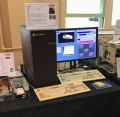 Personal IRIS (Andy Diller)
-
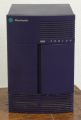 IRIS Indigo (Retro-Computing Society of Rhode Island)
-
 IRIS Crimson badge (WayTru)


Related pages
[edit | edit source]References
[edit | edit source]- ↑ 1.00 1.01 1.02 1.03 1.04 1.05 1.06 1.07 1.08 1.09 1.10 1.11 1.12 1.13 1.14 1.15 1.16 "SGI IRIS", Wikipedia, en.wikipedia.org (revision of 14 June 2026). MIPS-based models, Professional, Power and Personal IRIS lines, naming, 4D1 and IRIX, keyboard connectors.
- ↑ 2.0 2.1 2.2 2.3 "SGI Crimson", Wikipedia, en.wikipedia.org (revision of 16 August 2026). 4D/510, Power Series chassis, processors.
- ↑ "Professional IRIS", TechPubs Wiki, tech-pubs.net (revision of 4 October 2025). R2000 processors.
- ↑ 4.0 4.1 4.2 4.3 "Power Series", TechPubs Wiki, tech-pubs.net (revision of 5 October 2025). Models, CPU boards, IRIX support.
- ↑ 5.0 5.1 "Personal IRIS", TechPubs Wiki, tech-pubs.net (revision of 4 October 2025). Models and CPU boards.
- ↑ 6.0 6.1 "SGI Indigo", Wikipedia, en.wikipedia.org (revision of 25 February 2026). Indigo models and IRIX support.
- ↑ 7.0 7.1 7.2 7.3 7.4 "Professional IRIS 4D/50, Clover 1 graphics", IRIX Network forums, jan-jaap and others, June to August 2025, forums.irixnet.org. 4D/50 restoration: power supply, card cage, Clover 1 boards, 4D/60 history, IRIX without a network interface.
- ↑ 8.0 8.1 8.2 8.3 "Looking for help with a Professional IRIS", IRIX Network forums, jan-jaap and others, December 2018 to May 2021, forums.irixnet.org. 4D/70 GT restoration: IP4 boards and PROMs, GT boards, VME jumpers, hinv.
- ↑ "LH Research - research", IRIX Network forums, jan-jaap and others, April 2022, forums.irixnet.org. LH Research supplies in the Professional IRIS and Crimson.
- ↑ Silicon Graphics, POWER Series Technical Report, 1989, sections 1 and 2, from the Internet Archive item sgi-power-series-technical-report-1989.