

SGI Indigo
 | |
| An IRIS Indigo from the front (Retro-Computing Society of Rhode Island, CC BY-SA 3.0) | |
| Specifications | |
|---|---|
| Manufacturer | Silicon Graphics |
| Type | Desktop workstation |
| Released | Announced July 1991; R3000 model 22 July 1991, R4000 model July 1992[1] |
| CPU | MIPS R3000A with R3010A FPU at 33 MHz (IP12 board); R4000 at 100 MHz or R4400 at 100 or 150 MHz on a CPU module (IP20 board)[2][1] |
| Memory | 12 SIMM sockets in groups of four; 8 to 96 MB on the IP12, up to 384 MB on the IP20[3][2][1] |
| Storage | Three internal 3.5-inch SCSI bays, drives mounted on sleds[2][4] |
| Display | — |
| Sound | Motorola 56001 DSP at 20 MHz[2] |
| Graphics | Entry, XS-8, XS-24, XS-24Z, XZ or Elan[1][5] |
| Expansion | Two GIO32 slots on the CPU board[5][4] |
| Power | 100–240 V AC, 47–63 Hz, 2.5–1.6 A (R3000 brochure)[2] |
| Dimensions | 381 × 241 × 277 mm (15 × 9.5 × 10.9 in, height × width × depth)[2] |
| Weight | 10.9 kg (24 lb)[2] |
| OS / Firmware | IRIX 4.0 to 5.3 (R3000); IRIX 4.0.5E to 6.5.22 (R4000 and R4400)[4][1] |
| Predecessor | SGI Personal Iris[4] |
| Successor | SGI Indigo² and SGI Indy[1] |
| Codename | Hollywood (IP12, R3000); Blackjack (IP20, R4000)[1] |
The SGI IRIS Indigo, usually called the Indigo, is a desktop workstation that Silicon Graphics announced in July 1991. It was built on two different processor boards: the IP12 with a 33 MHz R3000A, and from July 1992 the IP20 with an R4000 or R4400 on a removable module.[1] The R3000 board is closely related to the IRIS 4D/30 and 4D/35 of the SGI IRIS 4D family; Wikipedia describes the Indigo R3000 as a reduced-cost 4D/35 without the VME bus.[1] The Indigo² took its place, with the Indy below it.[1] The R4000-family machine is described separately as the SGI Indigo R4000. The faults owners report include a flat clock battery, a lost Ethernet address after a board swap, and power supply failures.[4][6]
Models
[edit | edit source]| Board | Code name | Processor | Memory | Introduced |
|---|---|---|---|---|
| IP12 (HP1) | Hollywood | R3000A and R3010A FPU at 33 MHz, soldered to the board | 8 to 96 MB in SGI's own SIMMs | 22 July 1991 |
| IP20 (HP2) | Blackjack | R4000 at 100 MHz or R4400 at 100 or 150 MHz, on a removable CPU module | Up to 384 MB in 72-pin SIMMs with parity | July 1992 |
Wikipedia gives the R4000 model's starting price as $12,485.[1] SGI also sold a server version without graphics.[1] On R3000 machines the graphics option was printed on the front door; R4000 machines had a small badge with the graphics option and "4000".[4] Changing an R3000 Indigo into an R4000 one needs both the IP20 board and a different power supply.[5]
Hardware
[edit | edit source]
Chassis and boards
[edit | edit source]The CPU board, the graphics board and the SCSI drives plug into a backplane.[5] With the plastic front cover off and the front metal panel opened, the CPU board is the left of the two boards, labelled CPU and held by two levers; the graphics board has white ejector levers. The power supply is the metal box in the upper right corner.[7][8][9] A locking bar can be fitted that stops the front plate being removed.[4]
Processor and memory
[edit | edit source]The IP12 has its R3000A soldered to the board; the IP20 carries its processor on a module, so a 100 MHz IP20 can be upgraded by changing only the module.[5] SGI's owner's guide gives separate procedures for replacing the IP12 board and for replacing the CPU module on the R4000-family board.[7]
Both boards have twelve SIMM sockets in three groups of four, A, B and C, and each group must hold four SIMMs of the same capacity. The two families use different SIMMs, which cannot be moved from one to the other.[3] The IP12 takes SGI's own SIMMs in 2, 4 and 8 MB sizes, also used in the R3000 Personal IRIS, and they have to be levered out with SGI's plastic removal tool.[5][3] The IP20 takes standard 72-pin fast-page-mode SIMMs with parity, 36 bits wide, up to 32 MB each.[1][10][5]
Graphics
[edit | edit source]The Entry option is an 8-bit frame buffer with no hardware acceleration and a VGA connector. The Express options share one board design and differ in frame buffer memory, Z-buffer and the number of GE7 geometry engines:[5][1]
| Option | Frame buffer | Z-buffer | Geometry engines |
|---|---|---|---|
| XS-8 | 8-bit | No | 1 |
| XS-24 | 24-bit | No | 1 |
| XS-24Z | 24-bit | Yes | 1 |
| XZ | 24-bit | Yes | 2 |
| Elan | 24-bit | Yes | 4 |
[5][1] The Express boards use a 13W3 monitor connector with sync on green.[5][4]
Audio, I/O and storage
[edit | edit source]Audio is handled by a Motorola 56001 DSP at 20 MHz.[2] Ethernet uses a SEEQ 80C03 and SCSI a WD33C93, both served by SGI's HPC peripheral controller.[1] The rear panel has two RS-422 serial ports on 8-pin mini-DIN connectors, a bidirectional parallel port, a SCSI-2 port and an AUI Ethernet port.[2][11][12] The keyboard socket looks like a PS/2 socket but needs an Indigo keyboard, and the mouse plugs into the keyboard.[5][9]
The three drive bays take 3.5-inch SCSI drives mounted on sleds. The upper two are reached through a small door, for removable-media drives.[4]
The Ethernet address is stored in a 93C56 serial EEPROM in a socket on the backplane, not on the CPU board.[4] The IP12 and IP20 keep it in different places in that chip. An IP20 copies the address across when it is first fitted, but putting an IP12 back afterwards erases it.[4][13]
Power supply and cooling
[edit | edit source]
The power supply slides into the chassis from the front. Its fan faces the back of the machine, just above the power sockets, and the speaker is on the front of the supply.[8][9] The rating label on one machine gives the input as 100–240 V, 6–3 A, 47–63 Hz, and the monitor outlet as 3–1.5 A maximum.[14] SGI's 1992 brochure for the R3000 models gives 2.5–1.6 A and 1000 BTU per hour.[2]
The supplies were not designed by SGI and no schematic is known.[15] The supply in one owner's R4400 Indigo is an ITT PowerSystems PEC4044B, part 6064459 Rev F; that owner believes R3000 machines use a different supply.[6] Another owner reports that the 5 V rail of the R4000-variant supply is rated at 34 A and that the supply needs a load on 5 V before it will start on the bench.[16]
Clock and battery
[edit | edit source]
On the IP12 board the clock is a DP8572A (U61) with a 32.768 kHz crystal. A 3.6 V battery, BT1, feeds its backup supply pin through diode CR1 and a 1 kΩ resistor, R636.[17] The original battery is a Tadiran TL-5186, 3.6 V. When it is flat the machine repeats "Can't set tod clock" while booting.[4] See General Maintenance for replacing it.
Known faults
[edit | edit source]- Flat clock battery: "Can't set tod clock" at every boot.[4][18]
- Ethernet address reads ff:ff:ff:ff:ff:ff, after the EEPROM fails or after an IP12 board is refitted to a machine that has had an IP20 in it.[4][13]
- On an IP20, a boot warning that a revision C memory controller is needed for the SIMMs fitted. The TechPubs Wiki says it is safe to ignore if all the memory shows in hinv and there are no memory errors.[4]
- Power supply faults. Owners have reported corroded rectifier diodes, a shorted diode (CR106) and supplies that failed outright.[6][16]
- A low +12 V rail and a machine stuck at an amber LED, caused by a cracked solder joint on the supply-to-backplane connector or by a supply that was not fully seated.[19]
See SGI Indigo Troubleshooting Guide for diagnosis.
Documentation
[edit | edit source]- IRIS Indigo Workstation Owner's Guide (007-9065-050): File:SGI IRIS Indigo Workstation Owner's Guide (007-9065-050).pdf
- HP1 (IP12) CPU board schematic (032-8044-003 rev C): File:SGI IRIS Indigo IP12 (HP1) CPU board schematic (032-8044-003 rev C).pdf
- IRIS Indigo brochure (HLW-DS-02, 1/92): File:SGI IRIS Indigo brochure (HLW-DS-02 1-92).pdf
See SGI Indigo Documentation for what each document covers.
Gallery
[edit | edit source]-
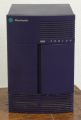 Front (Retro-Computing Society of Rhode Island)
-
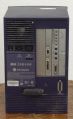 Rear panel (Retro-Computing Society of Rhode Island)
-
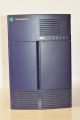 Front (Rules666)
-
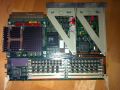 CPU board (ctvoigt)

Related pages
[edit | edit source]- SGI Indigo R4000
- SGI Indigo General Maintenance
- SGI Indigo Troubleshooting Guide
- SGI Indigo Capacitor Replacement Guide
- SGI Indigo Documentation
- SGI IRIS 4D
- SGI Personal Iris
- SGI Indigo²
- SGI Indy
References
[edit | edit source]- ↑ 1.00 1.01 1.02 1.03 1.04 1.05 1.06 1.07 1.08 1.09 1.10 1.11 1.12 1.13 1.14 1.15 1.16 "SGI Indigo", Wikipedia, en.wikipedia.org (revision of 25 February 2026).
- ↑ 2.00 2.01 2.02 2.03 2.04 2.05 2.06 2.07 2.08 2.09 2.10 Silicon Graphics, IRIS Indigo brochure, HLW-DS-02 1/92, 1992, specifications page (File:SGI IRIS Indigo brochure (HLW-DS-02 1-92).pdf).
- ↑ 3.0 3.1 3.2 Silicon Graphics, IRIS Indigo Workstation Owner's Guide, 007-9065-050, 1996, pp. 41–62 (File:SGI IRIS Indigo Workstation Owner's Guide (007-9065-050).pdf). Installing and removing memory.
- ↑ 4.00 4.01 4.02 4.03 4.04 4.05 4.06 4.07 4.08 4.09 4.10 4.11 4.12 4.13 4.14 "IRIS Indigo", TechPubs Wiki, tech-pubs.net (revision of 4 October 2025). Hardware, badges, drive bays, IRIX support, battery, memory controller warning, Ethernet address EEPROM.
- ↑ 5.00 5.01 5.02 5.03 5.04 5.05 5.06 5.07 5.08 5.09 5.10 5.11 Kaya Kupferschmidt, "The SGI IRIS Indigo", hardware.majix.org, 2003, hardware.majix.org. Boards, memory, graphics options, GIO slots, keyboard, upgrade from R3000.
- ↑ 6.0 6.1 6.2 "Help identifying Indigo PSU components?", IRIX Network forums, October to November 2025, forums.irixnet.org.
- ↑ 7.0 7.1 SGI, 007-9065-050, pp. 141–150. Replacing the CPU board or CPU module.
- ↑ 8.0 8.1 SGI, 007-9065-050, pp. 151–155. Replacing the power supply.
- ↑ 9.0 9.1 9.2 SGI, 007-9065-050, pp. 112–117. Power-on tests, LED states and messages.
- ↑ Kaya Kupferschmidt, "SGI Indigo Buyer's Guide", hardware.majix.org, 2003, hardware.majix.org. IP20 memory with parity.
- ↑ SGI, 007-9065-050, appendix A, pp. 181–188. Serial, parallel, Ethernet AUI, keyboard, SCSI and audio pinouts.
- ↑ "SGI Iris Indigo 3000K", IRIX Network forums, May 2022, forums.irixnet.org. Mini-DIN-8 serial pinout quoted from the IRIX serial(7) manual page.
- ↑ 13.0 13.1 "IRIS Indigo -- 5.3 Network setup and MAC Address woes", IRIX Network forums, November 2021, forums.irixnet.org.
- ↑ Retro-Computing Society of Rhode Island, photograph of the rear of an IRIS Indigo, model CMNB003B (File:SGI IRIS Indigo rear (RCS-RI).jpg). Rating label.
- ↑ "Iris Indigo pops GFI when powered on", IRIX Network forums, weblacky, 28 October 2025, forums.irixnet.org.
- ↑ 16.0 16.1 "Indigo R4400 PSU Repair", IRIX Network forums, 18 April 2026, forums.irixnet.org.
- ↑ Silicon Graphics, HP1 schematic, 032-8044-003 rev C, 31 October 1991, sheet 16, "Boot PROM and RTC" (File:SGI IRIS Indigo IP12 (HP1) CPU board schematic (032-8044-003 rev C).pdf).
- ↑ "Bringing an Indigo back to life - worth it?", IRIX Network forums, October 2020, forums.irixnet.org.
- ↑ "Need troubleshooting help with Indigo (2.2v on 12v rail)", IRIX Network forums, May 2026, forums.irixnet.org.